Office Clearance in Ilford
Office Clearance Ilford provides commercial clearance services for workplaces that need desks, chairs, filing, IT items and mixed office contents removed with care. The service is designed for businesses that want a tidy, organised clearance handled around the practical realities of a working site, whether that means a single suite, a shared floor or a larger commercial unit. We focus on straightforward removal, sensible sorting and responsible disposal so the space can be returned to use without unnecessary disruption.
Our office clearance work covers routine removals, end-of-tenancy clearances, refurbishments and changes to internal layouts. In practice, that can include standard office furniture, storage units, meeting room items and general contents that no longer serve the business. If you are comparing options, it helps to think about what must go, what can stay in place and whether any items need to be kept separate for reuse, relocation or records management.
For a clearer starting point, you can identify the rooms, floors and item types that need attention before sending an enquiry. A brief description is usually enough to shape the work, and if there are access limits, lift restrictions or awkward pieces to move, those details help keep the plan practical. Tell us what needs clearing and we can discuss the most suitable approach for your premises.
Commercial clearance support for offices and workplaces
Office clearance is rarely just a matter of taking everything away. Businesses often need a phased approach that respects daily operations, tenant obligations and the condition of the building. Some clearances are best handled outside office hours or in sections; others are straightforward once workstations, storage areas and communal spaces are grouped sensibly. The right method depends on the amount of furniture, the layout of the premises and whether items are being removed from one floor or several.
We can help with the practical side of office clearances where items need to be separated, stacked, carried and removed in a controlled way. Typical work may involve desks, task chairs, cabinets, shelving, reception furniture and general business contents. If the clearance includes loose paperwork, box files or mixed stored items, it is sensible to decide in advance what should be removed and what should remain with the business. Office clearance details on the site can help you review the main service in more depth.
What usually forms part of an office clearance
A well-planned clearance often starts with a walk-through of the rooms involved, followed by a sensible sorting stage. Items that are clearly for disposal can be grouped together, while reusable pieces may be set aside for another department, another site or a future fit-out. In many premises, the most efficient sequence is to clear larger furniture first, then finish with smaller items, loose contents and final sweep-up work. That approach helps the space become usable again more quickly and keeps the process orderly from start to finish.
Furniture, equipment and mixed contents

Office clearances often involve a mix of furniture and general contents rather than one simple category of waste. Desks, pedestals, meeting tables, cupboards, shelving and soft seating all require different handling, especially where the items are bulky or assembled in place. If furniture is fixed, awkward to move or located in a tight area, the clearance method should allow for dismantling or careful removal without damaging walls, floors or shared corridors.
Equipment adds another layer of decision-making. Businesses may have monitors, printers, accessories, small electrical items and obsolete hardware that need to be separated from furniture and ordinary office waste. For that reason, the clearance plan should account for what is being removed, what is sensitive, and what is simply surplus. If you are arranging a larger project, our business waste removal page may also be useful where the work extends beyond desks and chairs.
It is often better to group similar items before collection than to leave everything mixed together. Doing so makes the clearance smoother, helps reduce time spent sorting on site and makes it easier to keep reusable items apart from anything that is being discarded. That is particularly useful in offices with multiple teams, shared storage rooms or surplus items collected over time. If your business is replacing furniture, a simple room-by-room approach can make the task easier to manage.
Planning access, timing and site conditions
Office clearance work can depend heavily on access. Stairwells, lift sizes, loading points, restricted entrances and managed buildings all affect how items are removed. A sensible clearance plan should take account of corridors, neighbouring tenants and any need to avoid busy times in shared buildings. Where a workplace has unusual access, the practical solution is usually to adjust the sequence of removal rather than force the job into an unsuitable pattern.
Two pieces of information are especially helpful when arranging a quotation: the scope of the rooms involved and any obvious access constraints. A short note about floors, parking arrangements, keys, lift use or loading access can make a major difference to how the work is planned. If you are ready to outline the job, contact us with the main details and we can take it from there.
- List the rooms, floors or zones to be cleared.
- Note any items that should stay on site or be moved separately.
- Mention access points, lift availability and any timing restrictions.
- Include a broad idea of the volume, from a few items to a full clearance.
Business waste and office furniture disposal

Some office projects are best thought of as a combined clearance and disposal task. That may include unwanted furniture, general business waste and items that have reached the end of their usable life. The important point is to keep the removal organised, especially where different types of material must be treated separately. A clear distinction between furniture, general waste and any equipment the business wants to retain can prevent confusion once the team starts work.
Where businesses are disposing of office furniture, it is helpful to decide whether items are destined for reuse, redistribution or disposal. A desk with a good frame may still be suitable for another setting, while damaged or outdated pieces may simply need to be removed. Our furniture disposal page covers that subject in more detail, and it can be a useful reference when you are comparing ways to deal with surplus workplace items.
For some sites, the clearance may also extend into storage rooms, back offices or areas used for accumulated paperwork and general supplies. In those cases, sorting becomes more important than speed. A calm, methodical approach helps avoid accidental removal of items that still have business use, and it also reduces the likelihood that the final workspace is left in an untidy condition. That is why clear instructions at the outset are valuable.
Choosing the right clearance approach for your premises
Every office has its own layout and level of urgency, so the right clearance approach depends on what is being removed and how the building functions. A small office may only need a few items taken away, while a larger workplace may call for staged removal over more than one visit. The most suitable approach is often the one that respects both the contents and the property itself, especially where fittings, finishes or shared access areas need to be protected.
It is also worth thinking about the end point. Are you trying to empty a floor for handing back, free up a single room, or remove redundant items before new furniture arrives? The answer shapes the clearance and helps determine whether the job should be handled as a full office clearance or as part of a broader clearance service if the contents are mixed with other stored items. Start with the rooms that matter most and build the plan from there.
Items that often need special attention
Some objects demand more care than ordinary office furniture. Cabinets that still contain files, items that are fixed to walls, heavier boardroom pieces and grouped equipment stacks can all slow a clearance if they are not planned for properly. If your workplace includes items that should not be moved without checking first, make that clear early so the work can be organised around them rather than adjusted at the last moment.
Price factors and quotation details
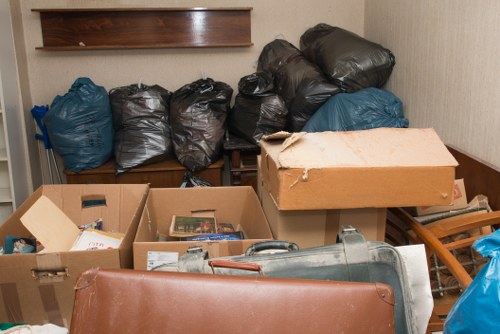
Quotation requests for office clearance are usually shaped by a few practical factors rather than by a single flat description of the job. The amount of furniture, the number of rooms, the building access, the presence of stairs or lifts and the need for careful sorting all influence the amount of work involved. Larger or more complex sites naturally take more planning than a straightforward single-room clearance, especially when items are spread across different areas.
Where possible, give a concise outline of what needs to be removed and how the premises are arranged. A short note about desks, chairs, filing units, cabinets, printers or mixed contents is often enough to begin a sensible estimate. If you want to compare the service with related pages, our pricing and quotes information explains how quotations are approached and what helps shape them.
Clear instructions are especially useful when an office contains both items to be cleared and items to remain on site. That is common during refurbishments, relocations and phased handovers. The clearer the separation, the easier it is to plan the removal and reduce avoidable back-and-forth. A well-prepared enquiry also makes it easier to agree any timing points before the work begins.
About Ilford
Ilford is a large town in East London and a major centre within the London Borough of Redbridge. Historically, it developed as a settlement on the main route from London to Colchester, and its growth accelerated with the arrival of the railway in the 19th century. Over time it became known for suburban expansion, shopping streets and a strong connection to transport links that tie it closely to the capital. The area sits within the wider suburban edge of London, where long-established residential streets sit alongside busy commercial corridors and newer developments. One of Ilford’s best-known green spaces is Valentines Park, a large public park associated with Valentines Mansion, a Grade II* listed building whose history reflects the evolution of the area from country estate to urban district. The town centre is marked by a blend of Victorian and later architecture, with retail frontages, civic buildings and residential terraces showing different phases of development. Cultural life in Ilford is also shaped by its diverse communities, places of worship, local businesses and everyday neighbourhood activity. The area has continued to change through regeneration and redevelopment, while retaining its identity as a busy east London town with strong rail connections and a clearly defined local centre.
Office clearances for changing workplaces
Businesses change shape over time, and office clearance often follows a move, a refit or a reduction in the amount of space being used. In those situations, the work is not only about removal; it is also about creating a clear finish to the process so the room can be handed over, refurbished or reconfigured. The clearance should be matched to the stage of the project, so that furniture, loose items and storage contents are dealt with in the right order.
If your workplace is being reworked in phases, it can help to separate the job into sections: one room for immediate removal, one for items awaiting decision and one for reusable contents that will stay on site. For offices with changing layouts, our flat clearance page may offer a useful comparison where the contents are more domestic in character, while still requiring careful removal and sorting.
We also work with businesses that want a tidy, final clear-out before a handover or new occupancy. In those cases, the aim is to leave the premises ready for the next stage rather than simply taking away obvious rubbish. That means paying attention to details such as grouped items, leftover storage contents and furniture that has been left in corners or unused rooms. A clean finish starts with a clear plan, especially where multiple teams have used the same space over time.
Useful ways to prepare an enquiry

A good office clearance enquiry does not need to be long, but it should be specific enough to be useful. Mention the type of premises, the number of rooms or floors and the main items to be removed. If there are bulky pieces, internal moves or areas that need to stay untouched, include those points too. That information helps shape the response and avoids unnecessary guesswork at the quotation stage.
It is also sensible to note whether the clearance is urgent, planned or tied to another event such as a move, refurbishment or lease end. That context helps decide how the work should be organised. If you are ready to move forward, the best next step is to request a quotation in plain terms and keep the focus on the items and access rather than on elaborate detail. Request a quotation when you are ready.
For businesses comparing related services, the most helpful pages are the ones that match the main task closely. A workplace clearance may overlap with furniture removal, mixed waste or business disposal, but it is still worth selecting the description that best fits the site. The clearer the scope, the easier it is to organise the clearance properly, and the easier it is to make a fair assessment of the work involved.